
How Automotive Suppliers Can Effectively Plan Their Network of Plants When Relocating Production

Relocating production within a network of plants is more than just a matter of capacity. The key factor is whether service, costs, and transformation align.
How Automotive Suppliers Ensure Feasible Detailed Planning in the Face of Last-Minute Changes to Order Calls

A prioritized task affects more than one slot in the schedule. The key is to determine which sequence still works given real-world constraints.
Interview: Rolling Capacity Planning: Planning for Internal Combustion Engines and Electric Mobility Together

How automotive suppliers plan capacity across their plants for internal combustion engines and e-mobility despite uncertain demand—with OPTANO and Gurobi.
Insights: Production Planning in Response to Changes in Demand
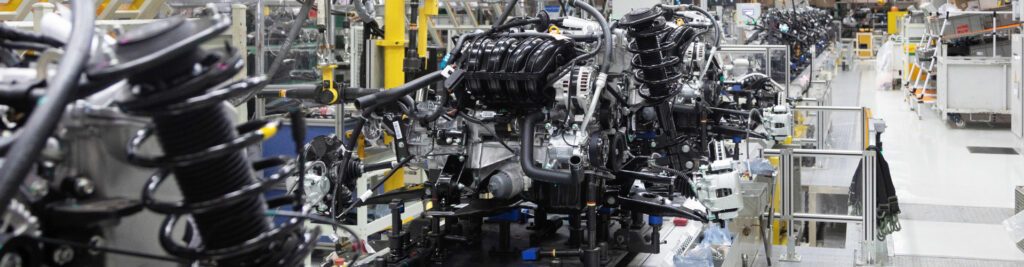
Changes in demand require quick responses. At the same time, effective production planning determines which scheduled processes will remain unchanged.
Insights: How Production Planning Turns Scarcity into a Transparent Decision

Material shortages in production planning cannot be eliminated through planning alone. However, scarce parts can be evaluated transparently and allocated to customer orders in a traceable manner.
Insights: When Low Water Levels Become a Planning Challenge

Low water levels are affecting the supply of raw materials in the chemical industry. What matters is not a single alternative transport route, but the coordinated interplay of capacities, inventories, and production priorities.
Insights: How Automotive Suppliers Reduce Cost Pressure Through Better Planning
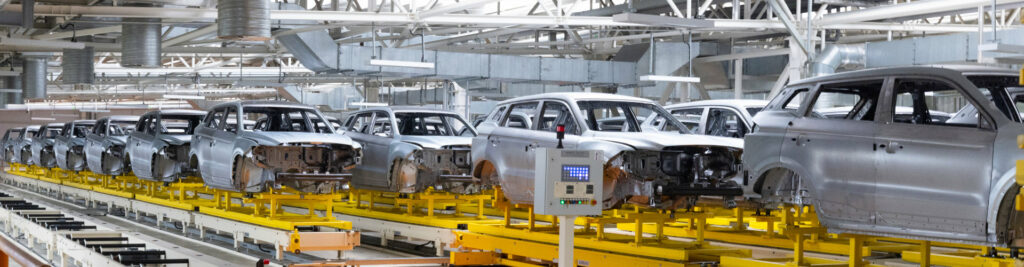
Automotive suppliers are under significant cost pressure. Mathematical optimization helps to better align decisions regarding production, capacity, inventory, and delivery capability—particularly in areas where costs often arise unnoticed: when there are conflicting objectives and uncoordinated planning assumptions.
Insights: Campaign and sequence planning in chemistry

A good production plan is not enough in the chemical industry. Only when tanks, materials, changeovers and priorities fit together can a resilient process be created. This article shows why campaign and sequence planning is a decisive lever and how mathematical optimization helps to resolve conflicting objectives.
Insights: New US tariff plans for the pharmaceutical industry

The new US tariff plans for pharmaceuticals not only affect costs, but entire supply chains. The article shows what this means for pharmaceutical companies in Europe and their planning.
Interview: Dynamic network realignment of volatile supply chains

Supply chains today are under constant pressure of uncertainty, while established network structures are increasingly reaching their limits. The interview shows why traditional planning approaches are no longer sufficient and how companies can make better decisions.