
Complex CEP transport networks:
Linehaul optimization with measurable short-term impact
How a data-driven proof of Concept can identify short term Linehaul-Cost savings of ~5-10% - and thus lays the foundation for holistic network optimization.
CEP networks under pressure: volume growth meets cost pressure
CEP networks have been undergoing major changes for years. Rising shipment volumes, demanding customer requirements, new service promises and an increasing degree of internationalization are leading to ever more complex linehaul structures. At the same time, cost pressure is growing - especially in international transportation.
Against this background, a key question arises for many network planning managers:
How can significant linehaul cost savings be realized in the short term without jeopardizing lead times, reliability and service levels?
Using a customer example from the CEP industry, we show how a focused, data-driven proof of concept can be used here - with rapid impact and a clear perspective for the next development step.
Initial situation: High complexity, limited transparency
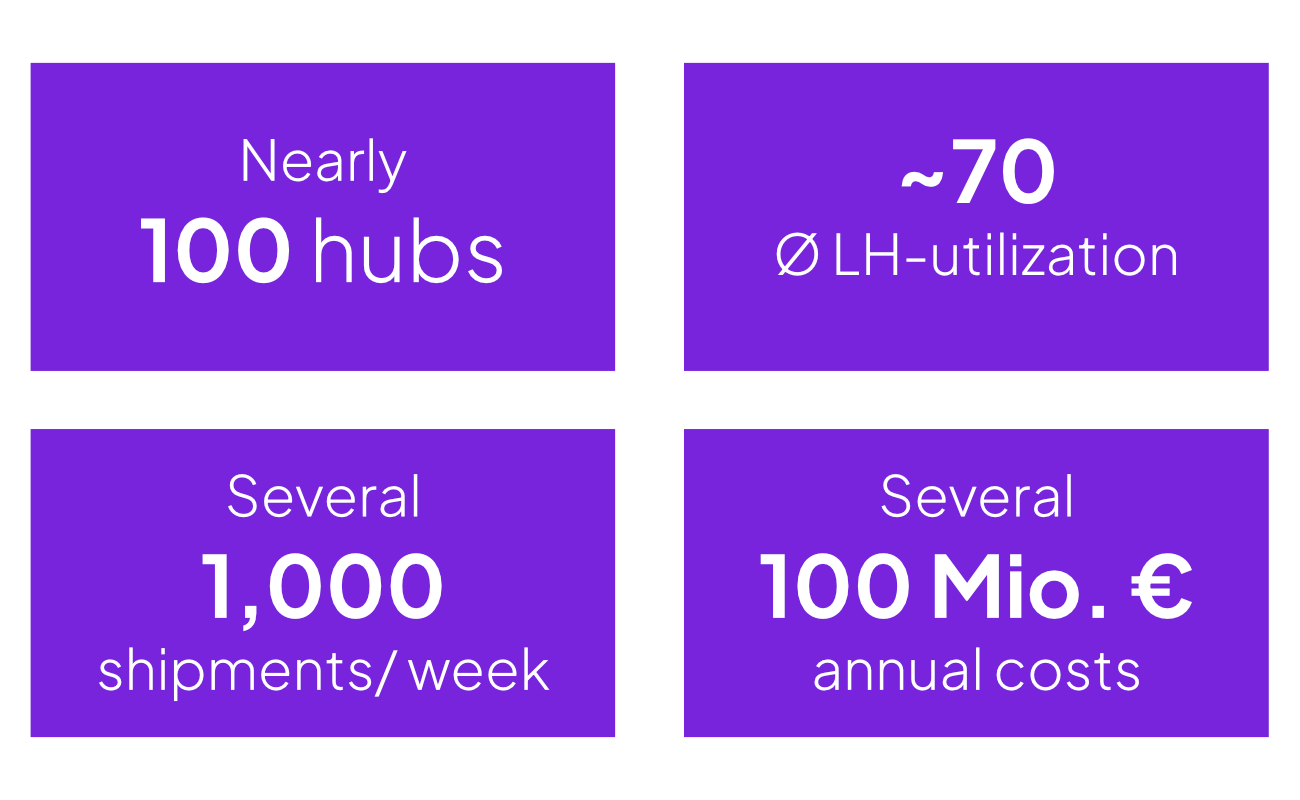
The European linehaul network in question has grown considerably over the years. It includes:
- One high double-digit number of hubs
- Several thousand transports per week
- An average utilization in the range of 70%
- Annual linehaul costs in three-digit million range
The network is stable and efficient, but lacks a consistent end-to-end view of capacity utilization, cost structures and interactions within the network. Efficiency potential is suspected, but is difficult to reliably identify and quantify.
At the same time, across-the-board operational measures such as frequency cuts or manual rescheduling are associated with considerable risks for the service and therefore cannot be implemented.
Approach: A focused proof of concept for rapid impact
Instead of directly initiating a comprehensive network optimization, our customer followed a focused approach: an eight-week proof of concept with the aim of identifying measures that could be implemented in the short term.
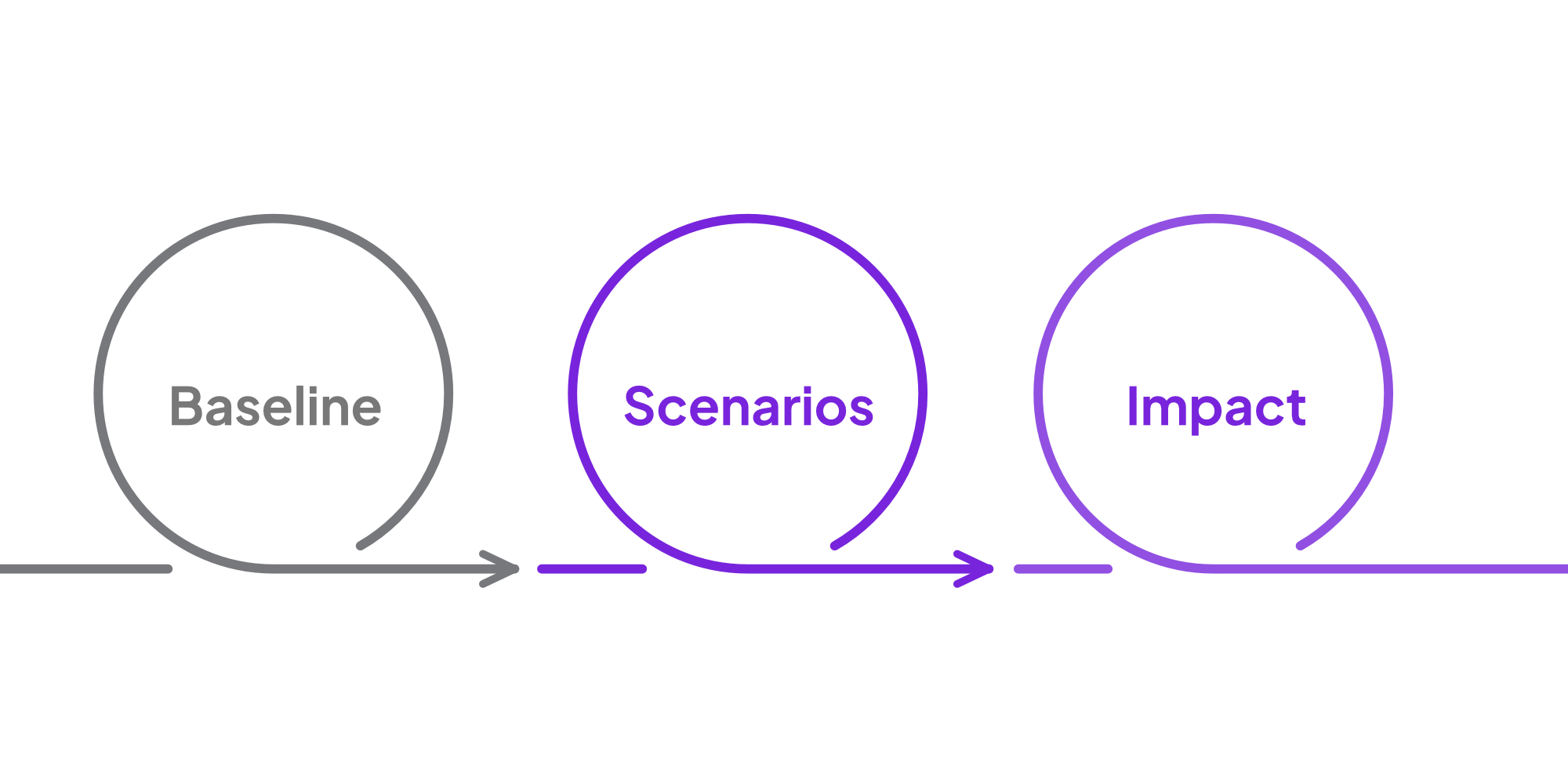
The PoC was structured in two phases:
- Precise modeling of the status quo
The existing Linehaul network was modeled holistically - including hubs, relations, frequencies, utilization, capacities, costs and routing logic in the network. The modeling was deliberately simplified in some areas, for example for complex vehicle routes: The focus was not on maximum depth of detail, but on a reliable, consistent reproduction of reality as a basis for quick analyses. - Targeted scenario analyses
Based on this, selected optimization levers were identified. The focus was on measures that can be implemented in the short term and are largely service-neutral. The results were deliberately designed as prioritized, quantified hypotheses that subsequently had to be evaluated operationally. Even if not every measure could be implemented, every measure implemented saved relevant costs. This deliberate simplification enabled speed and clear prioritization.
From data to decisions: Specific operational levers
The focus was on specific operational improvement levers, including:
- Multi-stop transportation for better utilization of existing lines
- Co-loading approaches for bundling volumes
- Adjustments to frequencies and capacities - if compatible with transit times
- Adjustment of the load mode to increase vehicle capacity
Multi-Stop
Co-loading
Frequency reduction
Changing the loading mode
The added value of the data-driven analysis lay in evaluating each measure in the context of the overall network. The impact on costs, capacity utilization and potential service effects became transparent - a crucial prerequisite for well-founded decisions and a structured manual evaluation.
Result: Measurable business value in a short time
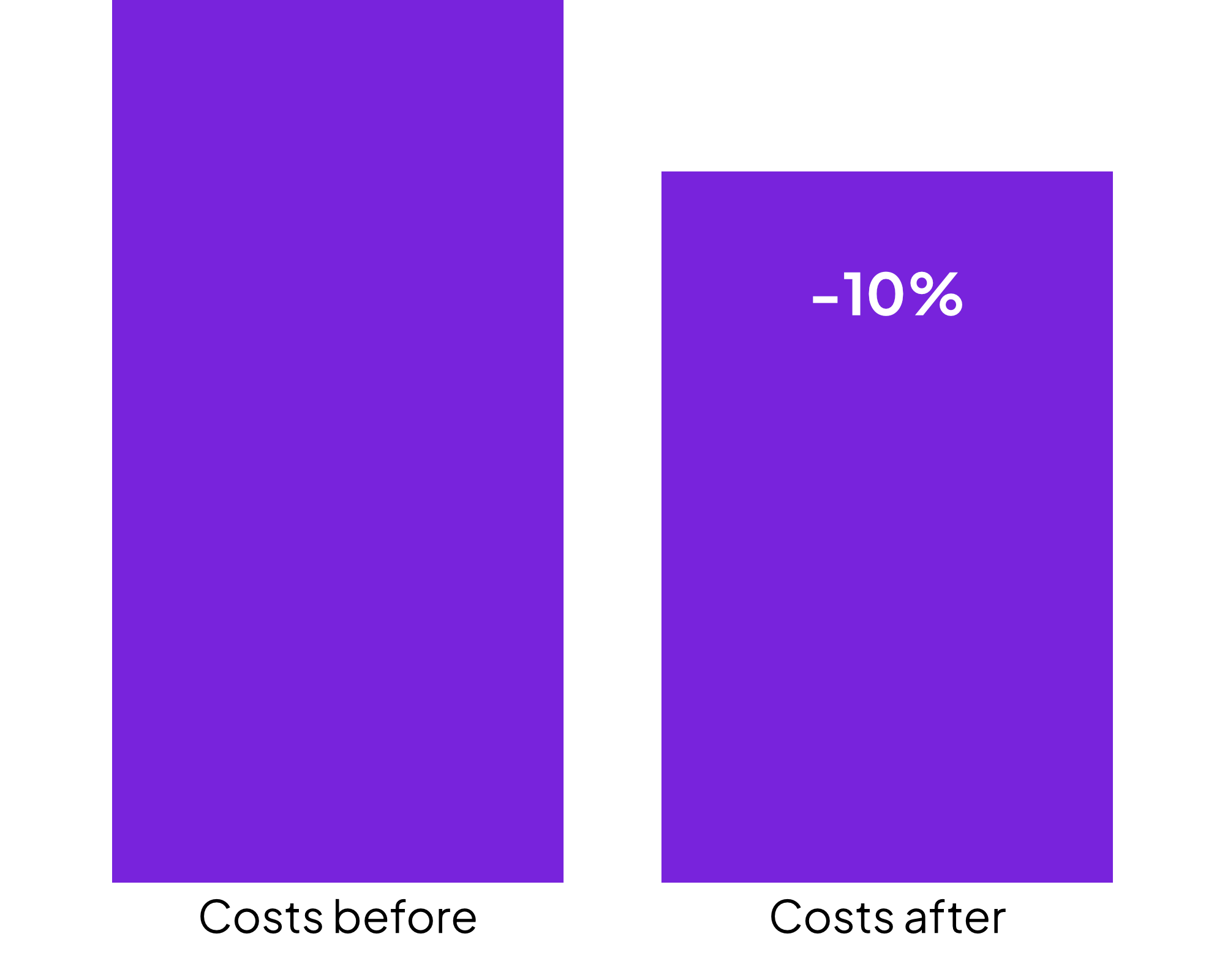
The proof of concept already showed clear effects:
- 10 % potential linehaul cost savings within the current year
- more than 50 detailed, quantified optimization hypotheses - with over 50% implementation rate
- Initial statements on operational feasibility and potential effects
This provided the customer with a fact-based decision-making basis for realizing short-term savings in a targeted manner - without jeopardizing the existing service level.
More than quick wins: the recommended next step
In addition to the short-term effects, there is also sustainable added value:
The proof of concept creates a consistent end-to-end view of the linehaul network and its key cost drivers. At the same time, a reliable data and model basis is created.
Building on this, the next logical step is recommended: Further development towards holistic transport network optimization, in which interdependencies, conflicting objectives and strategic issues are considered in a fully integrated manner. The measures identified in the PoC form the basis for this.
Further interesting content
Efficiency today, excellence tomorrow
This customer example shows how CEP companies can effectively counter increasing complexity and growing cost pressure:
A focused, data-driven approach enables short-term savings - while paving the way for long-term network excellence.
Would you like to find out how OPTANO as a software platform can support you on this path?
We are happy to show you how fast decision support and holistic optimization can be combined in a meaningful way.